(Oct. 12) -- Most historians in Russia and the West agree that Joseph Stalin was responsible for the deaths of millions of his own people. But now a bizarre libel hearing is under way at a Moscow court that could clear the name of the power-crazed Soviet dictator, widely considered one of history’s most vicious tyrants.
The dictator’s grandson, Yevgeny Dzhugashvili, is seeking $360,000 in damages from the liberal newspaper Novaya Gazeta. Dzhugashvili -- who bears his notorious grandfather's original Georgian surname -- alleges that in an April article the paper falsely accused his grandfather of personally signing death warrants for thousands of people. "I am happy the case has come to court, because I adore Stalin and bow down before his memory," Dzhugashvili told the London Times. "I'm fighting all these bastards telling lies about him."
Skip over this content
AP
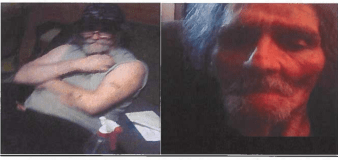
A Moscow court ruled against Yevgeny Dzhugashvili, shown at right in 1999, who sued a liberal newspaper for libeling his grandrather, the Soviet dictator Josef Stalin, pictured left in an official Soviet photograph from 1950.
But John Barber, an expert in Russian history at Cambridge University, says the Novaya Gazeta is guilty of nothing more than repeating well-established historical fact that Stalin personally ordered thousands of murders. Indeed, historians now believe that up to 30 million people died in the dictator's prison camps and purges. "There is absolutely no doubt that Stalin is directly implicated," he says. "His signature is on many lists featuring prominent victims, as well as orders sent to party and secret police officials in the provinces with the targets they had to meet in terms of liquidating opposition."
The lawsuit isn't the first attempt to clear the name of the former dictator, who died in 1953. In September, a brass plaque praising the Soviet leader's "labor and heroism" reappeared in a Moscow metro station, 50 years after it was first removed. And last year the government approved a new school textbook describing Stalin as an "efficient manager" who behaved "entirely rationally, as the guardian of a system."

Some Russian liberals see such moves as part of a whitewash being guided by President Dmitri Medvedev and Prime Minister Vladimir Putin, who they say want to use Stalin's achievements to justify their own repressive ways. "I think the authorities intend to change our constitutional system away from democracy towards authoritarianism," Lyudmilla Alexeyeva, head of the Moscow-based human rights NGO, the Helsinki Group, told the European Radio Network.
Novaya Gazeta, the paper Dzhugashvili is suing, has been a particular thorn in the side of the Russian government. Its star reporter, Anna Politkovskaya, was murdered Oct. 7, 2006, in Moscow after writing a series of investigative stories on Russia's brutal war in Chechnya. Last week hundreds of protesters marked the third anniversary of her death by calling for court action on her murder case, which remains unsolved.
Some dissidents say the state's efforts to burnish Stalin's reputation aim to redress the humiliations of the 1990s, when then-President Boris Yeltsin spoke openly about the crimes of the Soviet system. "The authorities are trying to build a bridge to the Soviet Union over the Yeltsin years to idealize Stalin," said Nikita Petrov, a historian with the Memorial human rights group. "They have decided it was too dangerous to delve into the horrors of our history. It is deeply sad. It is the football hooligan's view of history."
But even if the Kremlin is behind this campaign, it’s clear that many ordinary Russians are happy to see Stalin reclaimed as a national hero. In an online poll held last year to find the greatest Russian ever, Stalin came third — even though he was Georgian, not Russian. (Medieval prince Alexander Nevsky was first, and Pyotr Stolypin, prime minister to the last czar, was second.) "There are plenty of old people who had their best years in the Stalin period -- they were young and the Soviet Union was going places," says historian Barber. "Even though times were hard, many look back and see that the USSR was modernizing and achieving victory over the Nazis."
That's not a view held only by the old. In a 2007 survey of 16- to 19-year-olds carried out by the independent Yuri Levada Centre, 54 percent agreed that Stalin did more good than bad. "Many young people welcome the fact that Russia has recovered from the low point of the 1990s and are proud of what the country is becoming, which is a major power again," says Barber. "So they can identify with Stalin, who was someone who built up the country in the 1920s and '30s."
Now it is up to the court to decide how much freedom Russians will be allowed in assessing Stalin's legacy.